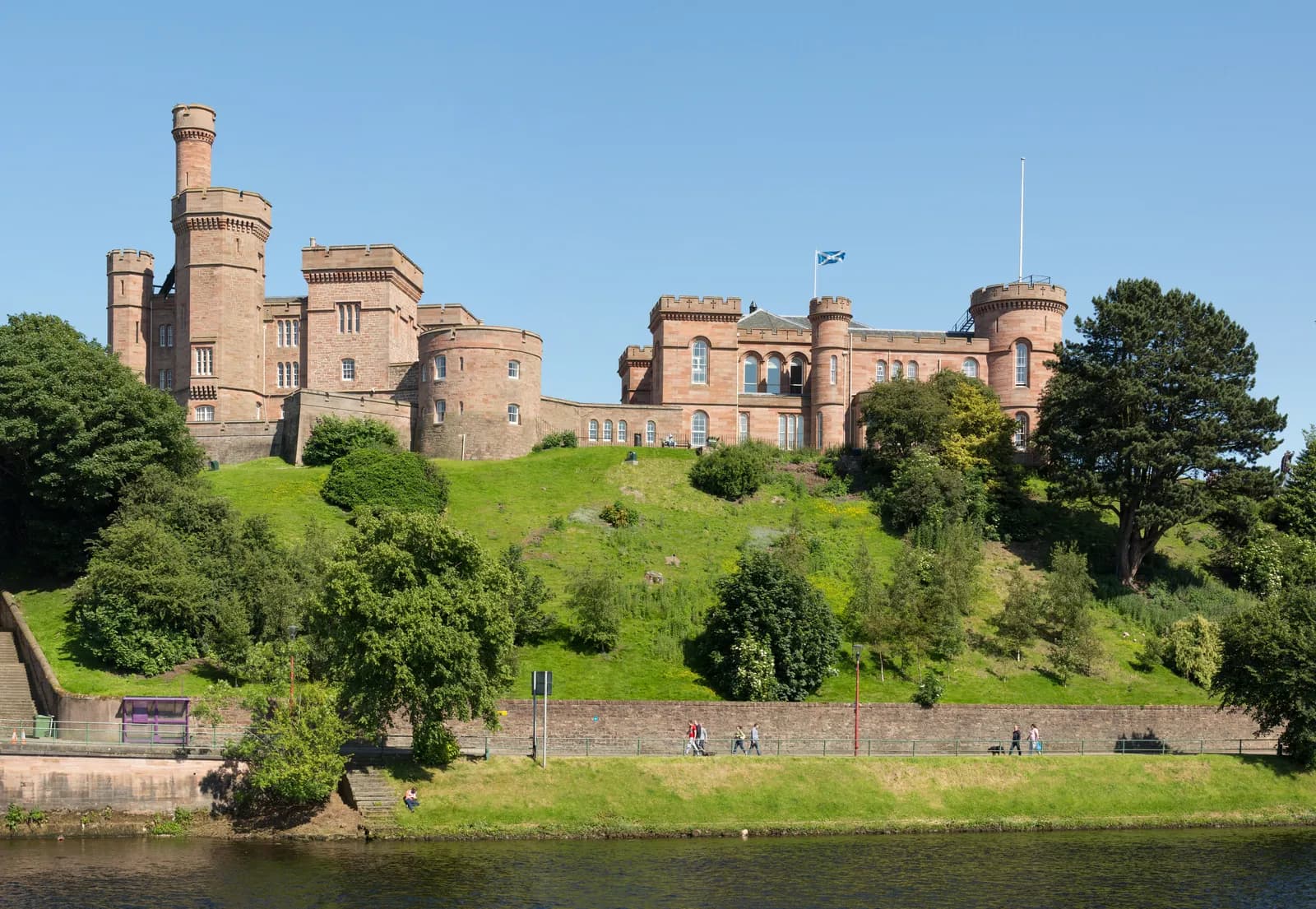
Inverness Castle has occupied its strategic cliff-top position above the River Ness since at least the 11th century. The present red sandstone structure, completed in the 19th century, is the latest in a long line of fortifications that have shaped the city's skyline and its place in Scottish history.
Early Origins and Medieval Fortress
A succession of castles has stood on the site since 1057. The first is traditionally associated with Malcolm III of Scotland, known as Malcolm Canmore, though the precise details of this early construction remain uncertain. In 1163, Malcolm IV appointed Shaw Macduff, the first chief of Clan Mackintosh, as constable of the castle, embedding the fortress within the region's clan politics. The medieval stronghold proved vulnerable; in 1307, Robert I of Scotland partially destroyed the castle and razed its battlements during his campaigns to consolidate royal authority.
Royal Summons and Clan Conflict
The castle continued to play a central role in Highland affairs. In 1428, James I summoned some fifty clan chiefs to a parley at Inverness Castle. Several were arrested and some subsequently executed, an episode that underscored the crown's turbulent relationship with the Highlands. More than a century later, in 1562, the Gordon family refused entry to Mary, Queen of Scots. Supporters from Clan Chattan, Clan Munro, and Clan Fraser then seized the castle on her behalf, illustrating the shifting allegiances that defined the region's power struggles.
Destruction and the Victorian Rebuild
The original castle did not survive the Jacobite risings. It was destroyed during the 1745 uprising, leaving the site in ruins. The current building was erected on the foundations of its predecessor. The main southern block, which incorporated the old County Buildings and the Sheriff Court, was designed by the architect William Burn and completed in 1836. The north block, originally built as a prison and later used as an additional courthouse, followed in 1848 under the design of Thomas Brown II. The bastioned enclosing walls were the work of the engineer Joseph Mitchell. Together these structures transformed the site from a medieval fortress into a symbol of 19th-century civic order.
From Courtroom to Visitor Attraction
For much of the modern era, Inverness Castle functioned as the seat of local justice. Hearings of the Inverness Sheriff Court were held there until 30 March 2020, when proceedings moved to the Inverness Justice Centre. In 2021, the castle and its surrounding grounds were closed to the public for extensive renovation and remodelling. The site is scheduled to reopen in 2025, marking a new chapter for one of Inverness's most recognisable landmarks.